



The History of “Black Friday Creep” and What It Means for Retailers
The myth of Black Friday
You’ve likely heard the story about the origin of Black Friday, that the name marks the moment retailers finally move from being “in the red” to “in the black.” It turns out, this is one of the marketing industry’s oldest myths, crafted in the 1980s to put a positive, business-friendly spin on what had long been a disruptive day.
The real roots go back to mid-20th-century Philadelphia. Police used the term “Black Friday” in the 1950s to describe the overwhelming traffic, crowded sidewalks, and general chaos that descended on the city the day after Thanksgiving, as shoppers and visitors arrived ahead of the Army–Navy football game.
Attempts by local merchants in the 1960s to rebrand the day as “Big Friday” never caught on, and by 1975 The New York Times was using the phrase to capture the frenzy in Philadelphia.
Nearly 100 years of holiday shopping history
The urge to stretch the holiday shopping season isn’t new. In 1939, Thanksgiving fell unusually late in November, leaving retailers with fewer days to capture Christmas spending. Retail industry leaders lobbied President Franklin D. Roosevelt to move the holiday up by one week
The decision sparked controversy. Some states observed the earlier date, others stuck with tradition, and the country ended up with two Thanksgivings for a brief period. Critics mockingly called it “Franksgiving.” The confusion lasted until 1941, when Congress stepped in and fixed the holiday on the fourth Thursday of November.
This moment showed that the tension between tradition and commerce has been shaping the holiday calendar for nearly a century.
It’s not just you. Holiday Shopping keeps getting earlier.
For decades, Black Friday was defined by in-store “doorbusters” and long lines. The rise of e-commerce in the late 1990s and 2000s blurred the lines between Black Friday and the newly coined Cyber Monday. Major retailers like Target, Walmart, and Best Buy expanded online platforms to compete with Amazon, stretching promotions across the entire Thanksgiving weekend.
The real turning point came in 2020. Packing stores with shoppers during the pandemic was impossible, forcing retailers to rethink Black Friday. Most deals moved online, and in-store promotions spread across the entire month. Surveys at the time showed more than half of consumers planned to shift most gift buying online.
This “social distancing through time” proved that shoppers were willing to buy earlier and that sales could be smoothed out over weeks instead of one chaotic day.
Year by Year Black Friday Creep Breakdown
2020: The pandemic broke the single-day model. Walmart launched three “Black Friday Deals for Days” events, beginning November 4. Target extended Black Friday pricing across November, and Home Depot started sales November 6.
2021: Walmart launched its first sale November 3 and another November 10. Best Buy moved its main event to November 19 after weeks of October deals.
2022: Walmart introduced weekly launches every Monday in November, while Best Buy started its official sale November 20.
2023–2024: Amazon escalated the creep by adding a second major sales event in October. Competitors like Walmart, Target, and Best Buy followed with their own October holiday kickoffs to avoid losing share before November.
The Amazon Effect: Reshaping the Retail Calendar
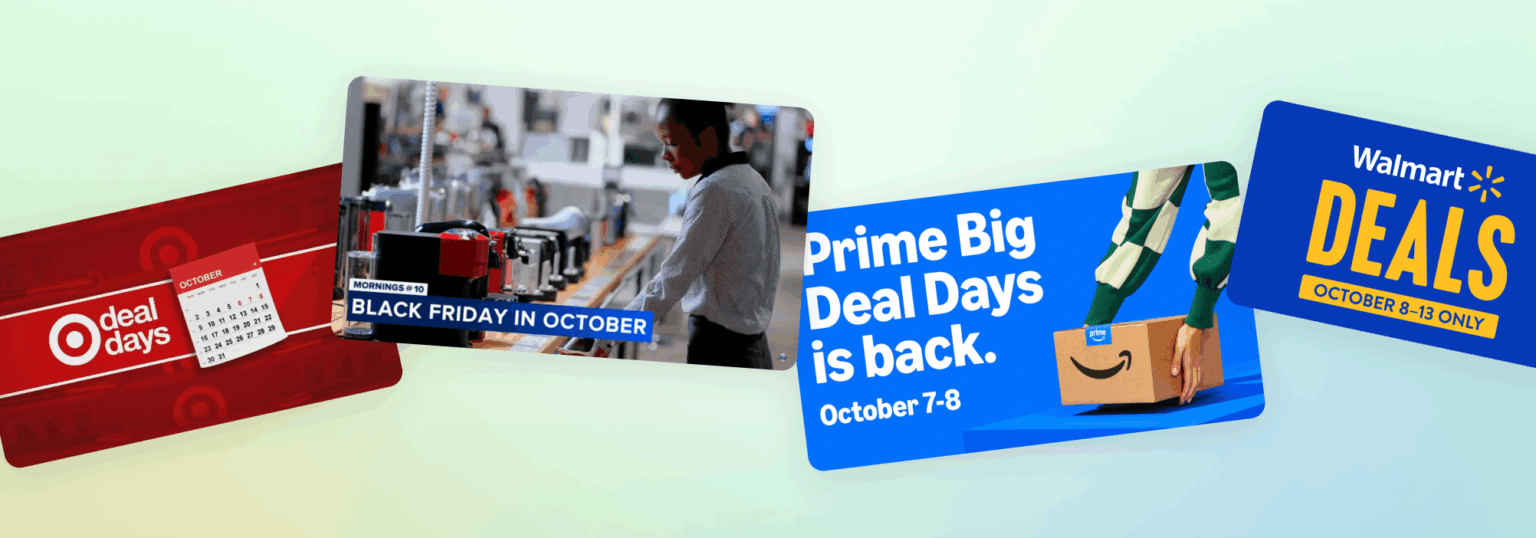
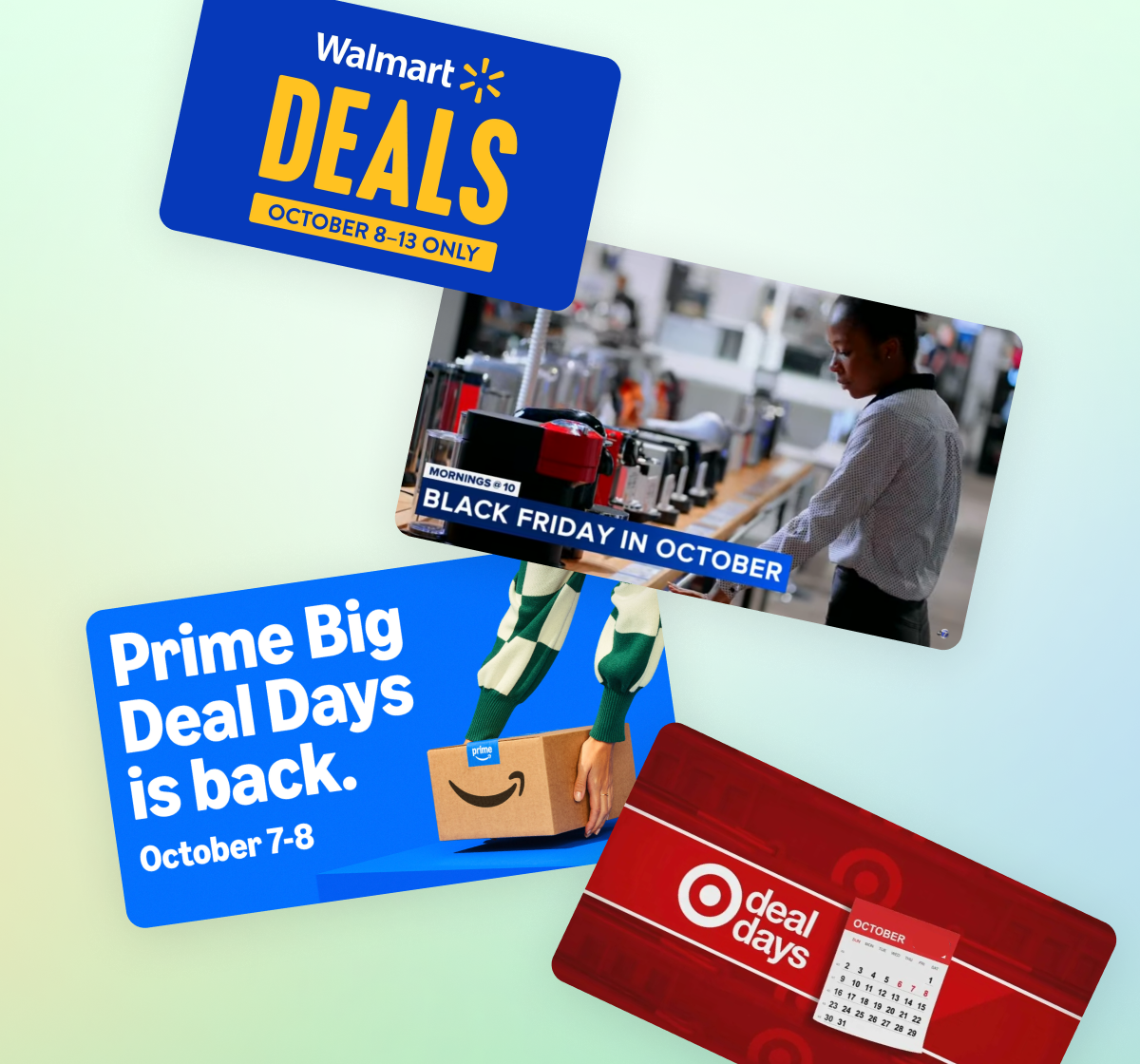
Amazon has become the single biggest force in reshaping the retail year. Prime Day created a new anchor event in July, and more recently, Amazon added a second major event in October. “Prime Big Deal Days,” scheduled for October 7–8 in 2025, acts as the starting gun for holiday shopping.
Its purpose is clear: capture budgets early and reinforce the value of Prime membership. The effect is equally clear. Competitors now feel compelled to launch October holiday events of their own to avoid losing early spend.
The Race to Capture Early Spend
The battle among retailers looks a lot like a prisoner’s dilemma. Everyone would benefit from limiting discounts to November, but the first to move into October grabs share before competitors have even entered the game.
The upside is obvious: capture spend early, spread revenue across weeks, and ease supply chain strain. The downside is just as real: longer discount seasons erode profitability. A retailer may post record sales in Q4 but disappoint on earnings as margins shrink.
Considering Consumer Psychology in an Uncertain Economy
Today’s shoppers are more deliberate, shaped by rising prices, tariffs, and cost of living. Nearly half now say they plan to start holiday shopping before October, spreading purchases across multiple pay periods.
This behavior creates a reinforcing loop. Consumers want to budget over time, and retailers want to capture dollars before competitors. Add in the “trade-down” effect, where shoppers shift to lower-priced options, and early promotions become even more attractive. The result is a new two-peak season: one surge in October and another around Cyber Week.
The 2025 Holiday Kickoff: October is the New November
The competitive strategies driving “Black Friday creep” are visible in the 2025 holiday plans of the largest retailers. These companies are starting major events in late September and early October, cementing October as the new kickoff.
| Retailer | Event Name | Start Date | End Date | The Strategy |
| Best Buy | 48-Hour Flash Sale | Sep 27 | Sep 28 | Earliest mover, captures tech spending before October rush. |
| Target | Target Circle Week | Oct 5 | Oct 11 | Starts before Amazon and Walmart. |
| Walmart | Walmart Deals | Oct 7 | Oct 12 | Brackets Amazon with a longer, more accessible sale. |
| Amazon | Prime Big Deal Days | Oct 7 | Oct 8 | Short, urgent 48-hour event. |
The Primacy of Digital and the Decline of the Doorbuster
The shift to online shopping is complete. In 2023, 79 percent of Cyber Week traffic came from mobile.
And the peak has moved. Between Nov 18–22, 2023, traffic hit 321 million sessions, 10 percent higher than the 291 million sessions during Cyber Five. Pre-Thanksgiving traffic grew 41 percent year over year, while Cyber Five traffic dropped 11 percent.
The center of gravity for online shopping has shifted to mid-November. Brands that wait until Cyber Five to spend big risk missing the true peak.
The Rise of the Deliberate, Research-Intensive Consumer
With deals spread across weeks, shoppers have time to research, compare, and hesitate. Many browse and load carts during early events like Prime Day, then wait to see if better discounts show up.
This stretches the funnel. Awareness and consideration now begin in September and October, long before conversion. Brands that meet shoppers here with reviews, comparisons, and transparent value propositions are more likely to win the sale later.
AI Impacts Both Sides
The rise of the deliberate shopper is being accelerated by the rapid adoption of AI. More than half of U.S. shoppers plan to use AI for holiday shopping in 2025.
Shoppers are using generative AI assistants as co-pilots to:
- Discover gift ideas tailored to specific recipients.
- Compare prices across multiple retailers in seconds.
- Surface reviews and ratings that matter most to them.
- Get logistical help with fulfillment options like Buy Now, Pay Later, delivery timing, or in-store pickup.
On the retailer side, AI is now embedded across the commerce stack. Retailers are using it to:
- Personalize recommendations based on browsing and purchase history.
- Adjust prices dynamically in response to demand, inventory, and competitor moves.
- Forecast demand more accurately, preventing stockouts and overstock.
- Automate service and sales support, with generative AI assistants that answer questions and guide shoppers to the right products.
The payoff is measurable. Retailers deploying generative AI in sales and customer service interactions have reported higher conversion rates, while also reducing strain on human service teams.
The catch: AI only works as well as the data it’s fed. Brands that provide rich, structured, and trustworthy product information will be the ones that surface most often in AI-powered discovery and deliver the most reliable experiences.
How to Win in the Creep Economy
Rethink the Q4 Marketing Calendar: It’s a Marathon, not a Sprint
Retailers must reallocate spend to match the two-peak season: early October and Thanksgiving week. Campaigns should be phased across discovery, early conversion, sustained consideration, and final conversion.
Optimize for Early Discovery
Consumers begin research in October. Brands must ensure products surface in AI-driven discovery and through off-site media.
- Generative Engine Optimization (GEO) ensures product data is rich, structured, and conversational.
- Off-site RMNs extend first-party data into CTV, programmatic, and social, reaching shoppers before they visit retail sites.
Compete on Value, Not Just Price
Retailers must defend margins by going beyond blanket discounts.
- Exclusive bundles raise order value.
- Tiered discounts encourage larger baskets.
- Target by discount affinity to ensure only customers who need a discount receive one, protecting profitability
Create Moments of Urgency in the Month-Long Sale
Retailers must engineer urgency inside long campaigns.
- Use daily deals or flash sales to drive immediate action.
- Add countdown timers and real-time inventory messaging.
- Retarget October browsers in November with urgency messaging.
Use an AI Assistant to Help Shoppers Make More Confident Purchases
Shoppers now spend weeks researching before they buy. Retailers can guide this process by using AI shopping assistants, which make discovery more interactive and help customers purchase with confidence.
- Kick off the conversation with a simple CTA, short questionnaire, or freeform prompt.
- Let the conversation flow with context-aware questions that map to real catalog filters.
- Recommend the right products, updating instantly based on shopper feedback.
Winning the Long Game
We all know the holiday shopping window has crept earlier and earlier, but simply starting promotions in October isn’t enough to stay ahead. Retailers that win will:
Plan for two peaks: Shift budgets to cover both October’s early surge and Thanksgiving week.
Protect margins: Use tactics like discount affinity targeting, bundles, and tiered offers instead of blanket markdowns.
Meet shoppers in research mode: Explore an AI shopping assistant to help customer surface reviews, ask detailed questions, and compare products during September and October when decisions are being made.
Black Friday creep isn’t going away. The opportunity lies in rethinking how you support and convert shoppers across the longer season.