



5 Ways Shopper Identification Increases Retail Revenue
Every retailer wants bigger orders, stronger loyalty, and higher retention — but many are missing an essential metric: shopper identification.
That’s why we put together the annual Bluecore Customer Growth Benchmarks Report. Every year, we analyze billions of transaction data points to show how retailers are moving customers through the lifecycle to boost core revenue metrics.
And the numbers are clear: Strong shopper identification boosts those metrics even more.
High ID Increases Purchase Frequency to 164%
Picture two retailers. One has a strong identification strategy in place, recognizing a high percentage of the shoppers who visit their site. The other struggles to identify visitors, relying on one-off transactions with little ability to re-engage past buyers.
The retailer with high ID rates uses their data advantage to anticipate needs and send timely, relevant follow-up messages based on shopping signals. Whether it’s a reminder about a product the customer considered, a recommendation that complements their last purchase, or an exclusive offer to re-engage them, these targeted touchpoints keep customers in an active buying cycle.
Meanwhile, the retailer with low ID rates struggles to re-engage past buyers. They send generic marketing blasts instead of strategic, personalized outreach, making it far less likely that a one-time buyer returns. As a result, their purchase frequency stagnates, forcing them to chase new customers instead of growing value from existing ones.
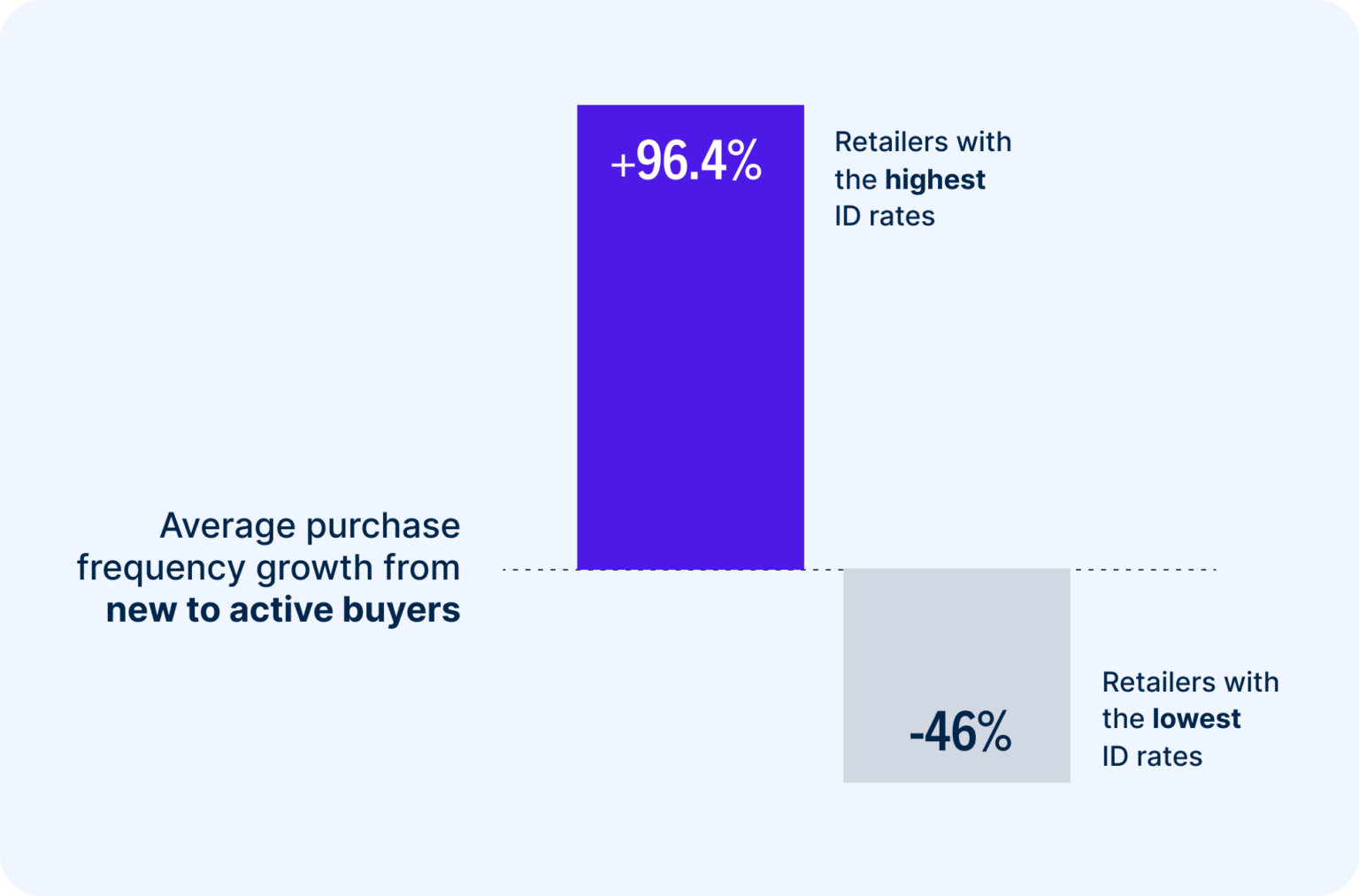
Here’s what the data says: Retailers across every vertical see growth in purchase frequency as customers moved from new to repeat buyers. But the strength of that growth has a strong correlation with a brand’s ID rate.
Strong ID Strategies Win Back Nearly 2x More Lapsed Customers
Reactivating lapsed buyers is one of the most overlooked growth levers in retail.
Strong shopper identification gives retailers the visibility and behavioral insights needed to bring lapsed customers back. By recognizing inactive shoppers, brands can send precisely timed winback messages — like restock alerts, personalized discounts, or reminders about products they loved.
Without a strong ID strategy, reactivation becomes a guessing game. Retailers lose track of past buyers, leading to generic, untargeted outreach that fails to bring them back. Instead of maximizing the value of previous customers, they let them slip away.
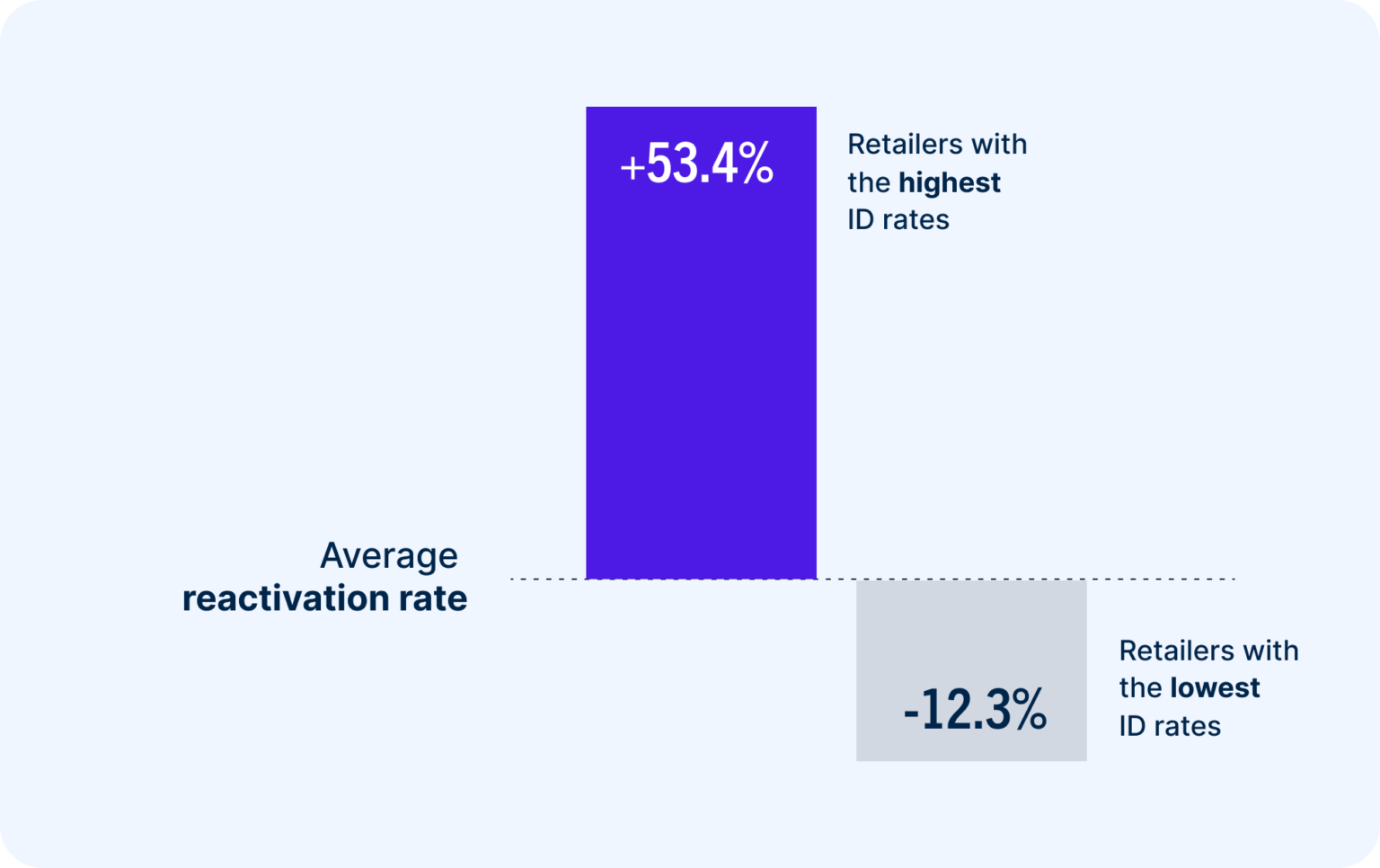
Here’s what the data says: The 10 retailers with the highest ID rates reactivate customers at nearly double the rate (11.2%) of below-average ID brands (6.4%).
Low ID Rates Lead to 4x Customer Loss by Year Three
It’s easy to get caught up in short-term wins, but the real measure of success is customer retention over time.
Here, high-ID retailers have a major advantage: They can recognize returning shoppers, track their preferences, and keep them engaged with personalized offers and tailored experiences. This sustained connection keeps customers buying, year after year.
For retailers with low ID rates, the challenge isn’t just losing customers — it’s losing visibility into who they are. Without the ability to recognize past buyers, brands struggle to nurture relationships beyond the first sale. That’s why their retention rate drops off dramatically, forcing them into an endless cycle of replacing lost customers rather than growing a loyal base.
As every strong retail team knows: retention isn’t just about great products. It’s about recognition. When retailers know their shoppers, they build a customer base that sticks around.
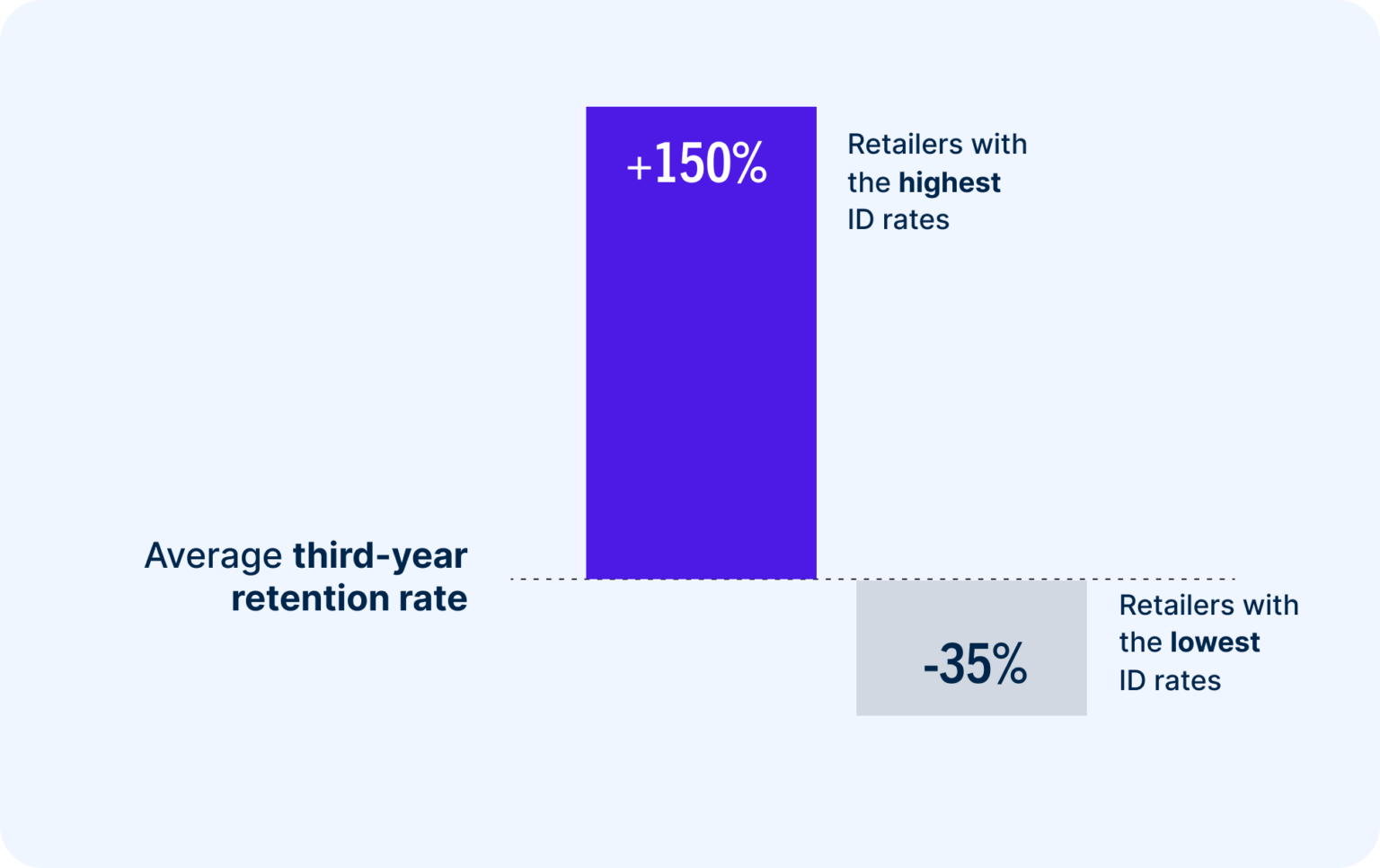
Here’s what the data says: Retailers with high ID rates retain 15% of customers into year three, while those with the lowest ID rates retain just 3.9% — a nearly 4x difference in long-term loyalty.
66% of Shoppers at Low ID Rate Retailers Never Buy Again
It’s hard to build a profitable business when two-thirds of your customers only buy once.
Strong ID strategies flip that script. By recognizing more shoppers and acting on their behavior, retailers create follow-up journeys that bring customers back, from helpful reminders to personalized offers. These touches turn a single purchase into an ongoing relationship.
In contrast, brands with weak ID rates often treat new buyers the same as anonymous traffic — no follow-up, no relevance, no reason to return. The result? Missed second purchases, wasted acquisition dollars, and a revolving door of disengaged shoppers.
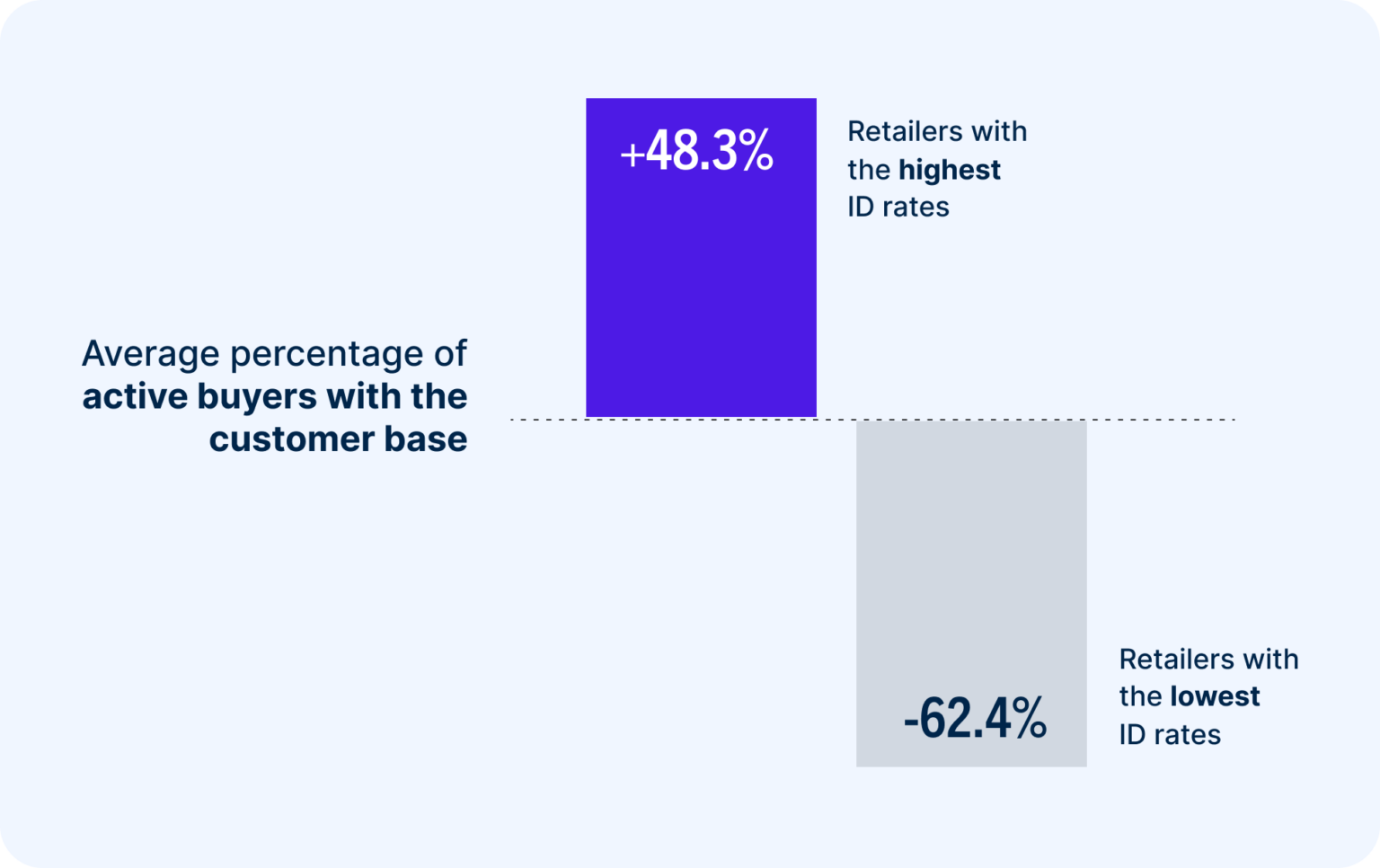
Here’s what the data says: At retailers with below-average ID rates, 66.9% of customers are “new buyers” who don’t return — compared to just 35% at high-ID retailers, where active buyers make up nearly half of their base.
Strong ID Retailers See 3x Sale Per Buyer
Retailers often chase more buyers, but the real revenue multiplier is getting each customer to spend more over time.
High-ID retailers don’t just track who’s shopping. They use that data to deliver personalized recommendations, relevant promotions, and tailored incentives that increase basket size and long-term value. When shoppers feel like a brand “gets” them, they’re far more likely to explore, add, and spend.
On the other hand, retailers with weak ID strategies are leaving money on the table. Without a way to connect past behavior with future opportunities, they default to generic messaging — missing key moments to upsell, cross-sell, or nudge customers toward bigger purchases. Instead of cultivating high-value shoppers, they’re stuck in a cycle of small, sporadic sales.
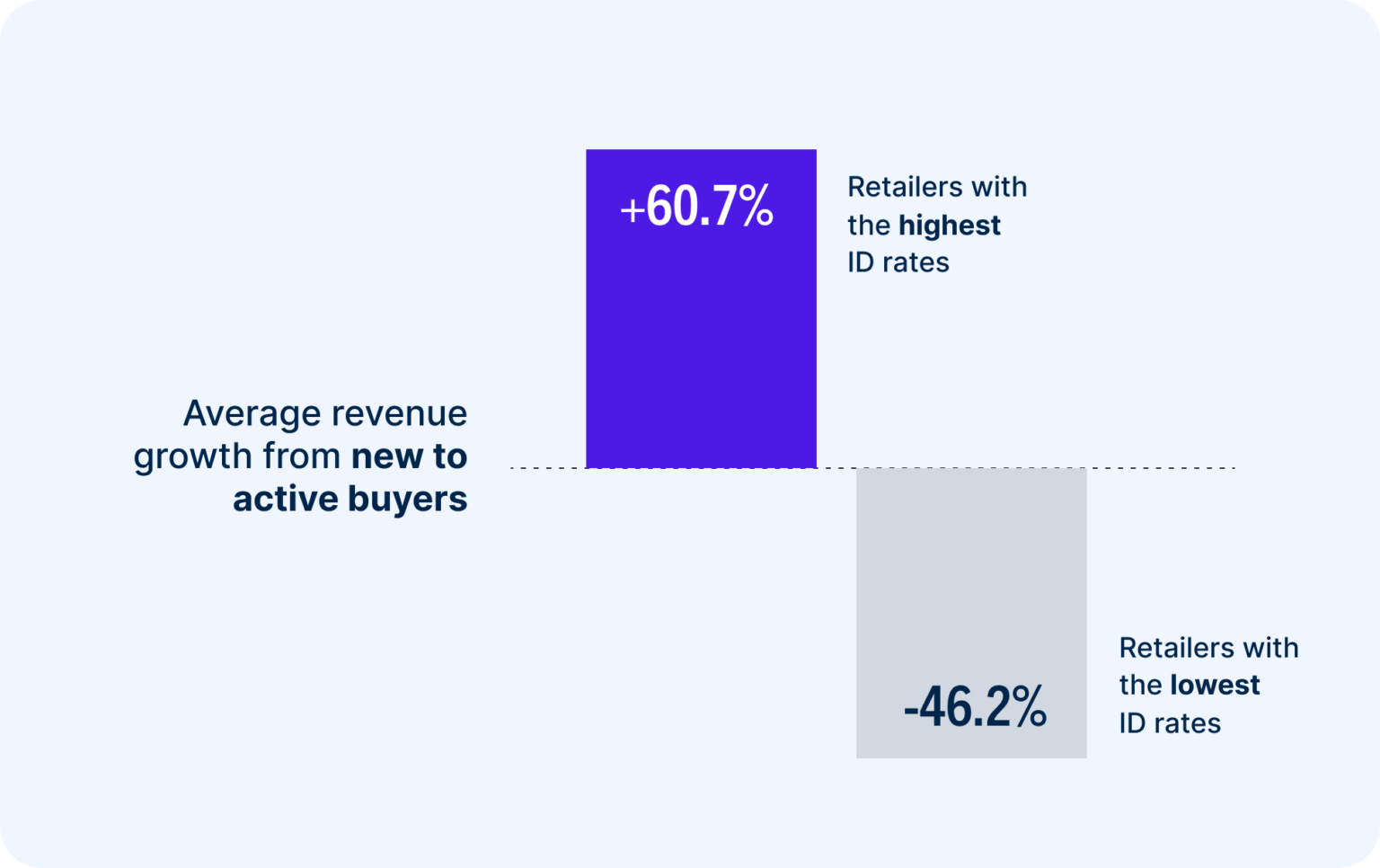
Here’s what the data says: Like purchase frequency, all retailers see more revenue from active buyers than new ones. And like we saw with purchase frequency, the level of growth varies wildly based on a retailer’s ID rate.
The High ID Rate Retailer: Winning on Every Front
What separates a thriving retailer from one that’s constantly chasing new customers?
Strong shopper identification.
Bluecore’s dataset — spanning millions of transaction-level insights — tells a clear story for the high ID rate retailer:
- They retain up to 4x more customers long-term, reducing their reliance on expensive acquisition strategies
- They see higher purchase frequency and sales growth, with active buyers spending significantly more over time
- They’re better positioned to re-engage lapsed customers, giving them a second chance at retention instead of writing them off as lost
Every day, retailers pay to bring shoppers to their sites. The next question is: can they recognize, re-engage, and retain them?
The retailers who can are building a competitive edge that grows with every passing quarter.