




Black Friday, Cyber Monday 2020: Data Reveals Historic eCommerce Activity, Early Shopping Trends & More
2020 has been a year unlike any other, and that’s made for a particularly interesting run-up to the holiday shopping season for retailers.
The overnight acceleration of eCommerce this year has forced brands to adjust marketing and fulfillment strategies and double down on all things digital. This focus came to a head during the fall, with an October Prime Day kicking off an elongated holiday season.
With Black Friday, Cyber Monday and the full “Cyber Week” now behind us, let’s take a look at the data to see how it all played out.
Black Friday Solidifies its eCommerce Debut
In 2018 and 2019, retailers brought in more individual orders via eCommerce on Cyber Monday than on Black Friday. Specifically, retailers saw 31% more eCommerce orders on Cyber Monday vs. Black Friday in 2018 and 21% more in 2019. In 2020, this number decreased to a mere 2% — amounting to an overall 26% increase in eCommerce orders on Black Friday compared to 2019.
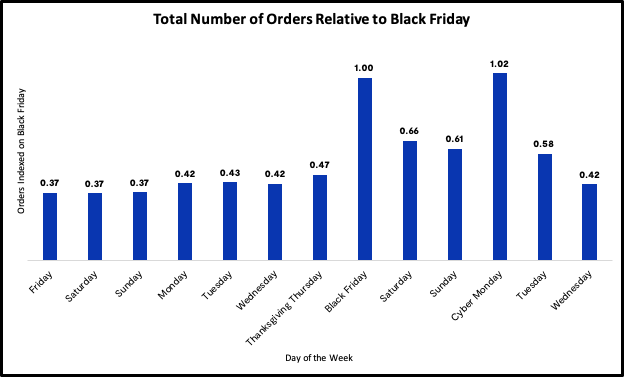
More than anything else, we can attribute the narrowing of eCommerce activity to the fact that more shoppers who made purchases during Black Friday in 2020 did so online rather than going into the store. While eCommerce activity certainly increased on Black Friday over the past several years, it was still very much a brick-and-mortar event — until 2020 that is.
Notably, Black Friday, Cyber Monday and the days immediately after remained the biggest days for retailers in terms of total number of orders. This trend is not surprising given that consumers are so accustomed to shopping on these days.
Holiday Shopping Shifts Earlier in the Season
Despite the heavy eCommerce activity during the more traditional Cyber Week, retailers did see significantly more activity leading up to Black Friday than in previous years.
This year, many brands aimed to shift shopping earlier into the season to get ahead of shipping constraints due to more eCommerce versus brick-and-mortar activity. Year over year data reveals the success of these efforts, with the biggest increases in site traffic, purchases and revenue between 2020 and 2019 occurring the week before Black Friday.
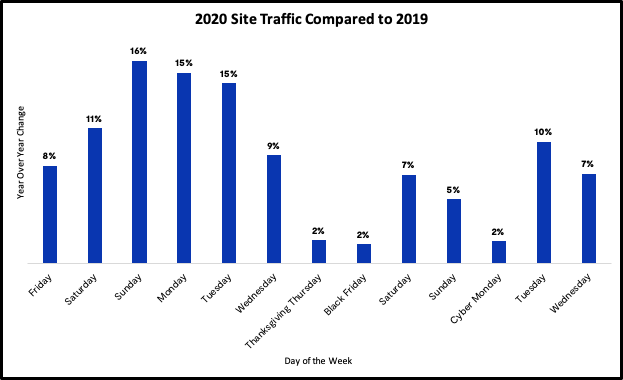
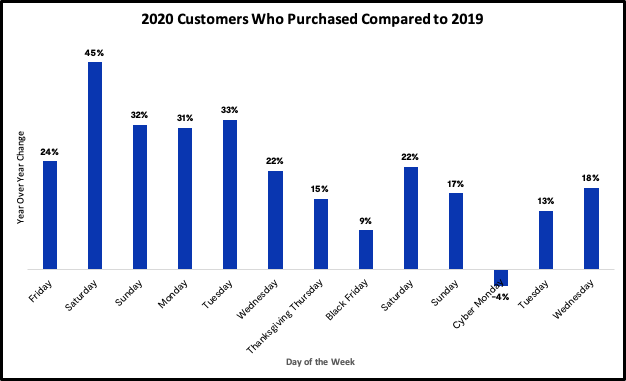
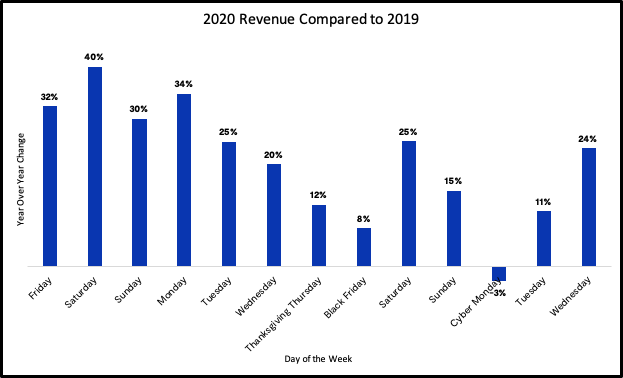
Interestingly, this shift paid off big time. Beyond the overall benefit of more time to fulfill orders and get them shipped, encouraging consumers to shop earlier produced higher average order values. While order value did not fluctuate tremendously during the days immediately before and after Black Friday, retailers saw some of the highest average order values in the week before Black Friday — despite reporting fewer products per order during those same days.
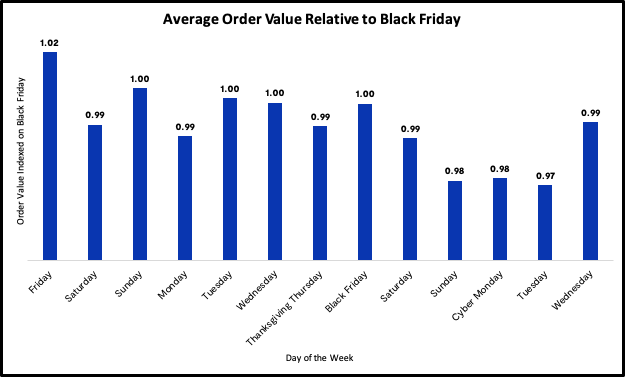
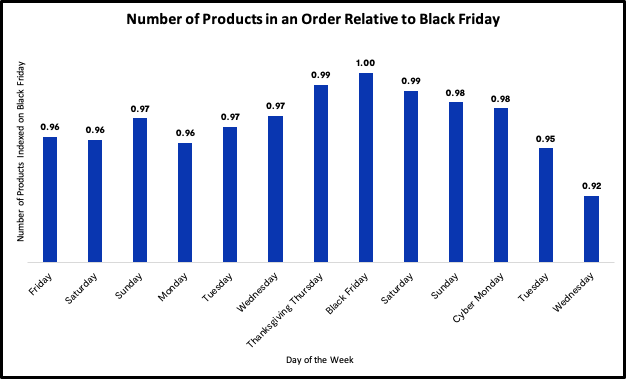
This trend suggests that most retailers successfully encouraged consumers to shop earlier while holding out on their biggest discounts until later in the week. Ultimately, that means retailers likely saw the biggest margins on orders that came in before Black Friday since those orders tended to have fewer products but the same (or even slightly higher) overall values.
Holiday Gains Continue to Offer Long Term Opportunities
Importantly, all of these gains present more than just a one-time spike for retailers. An average of 59% of Black Friday shoppers and 58% of Cyber Monday shoppers were first-time buyers for brands, which creates an incredible opportunity to convert these customers into repeat purchasers. Previously, brands have effectively converted nearly a quarter of these shoppers over the course of the following year.
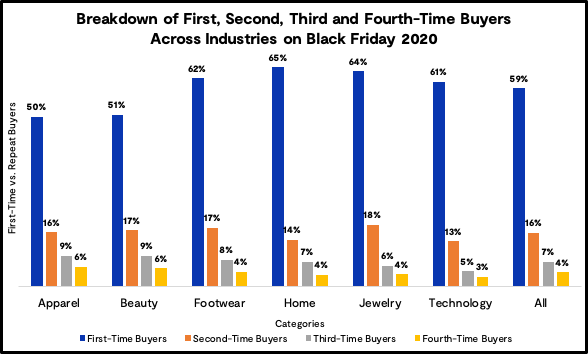
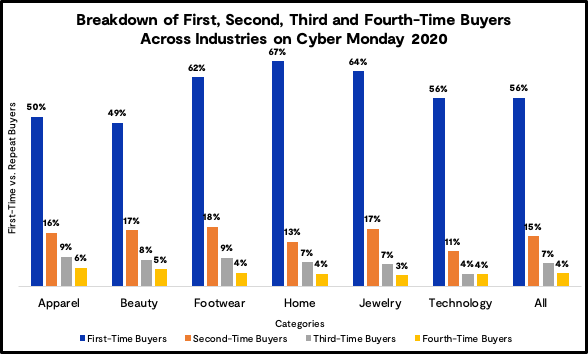
Retailers have already gotten their feet wet with this approach in 2020, having seen an incredible spike in first-time buyers since the onset of COVID-19 and the enormous changes in shopping patterns that it ushered in. On average, 6% of shoppers who first bought from a brand from March through September made repeat purchases during the early holiday season spanning from October through November.
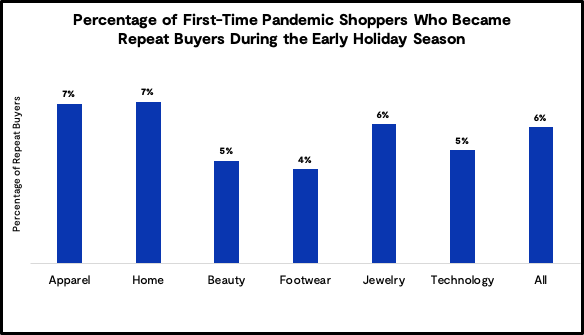
This pattern of first-time pandemic shoppers who became repeat buyers during the holiday season represents a good blueprint for brands to use as they attempt to convert the spike of first-time Cyber Week shoppers into more loyal customers.
End the Holiday Shopping Season on Top
The holiday shopping season may have started earlier than ever in 2020, but it’s still going strong. For more ideas on how to engage shoppers and drive high value purchases despite the unique challenges of this year, check out Bluecore’s Ultimate Holiday 2020 Handbook for Retail Marketers.