




The Next Evolution of Retail Marketing: From Campaign Operators to Performance Managers
Enterprise lifecycle marketing has quietly become one of the most operationally complex functions in retail.
More campaigns.
More channels.
More personalization.
More executive reporting.
But the structure of most marketing teams hasn’t changed to match that complexity.
Marketers are still expected to manually diagnose campaign performance, investigate anomalies, assemble reporting, and determine what to optimize next, often across dozens or hundreds of campaigns running simultaneously.
The result is a growing gap between the amount of marketing activity happening and the amount of performance intelligence teams can actually act on.
This is the gap Marketing Agent is designed to close.
Marketing Agent introduces a new operating model for lifecycle marketing — one where AI continuously analyzes campaign performance and surfaces the insights marketers need to improve revenue outcomes faster.
Not by replacing marketers. But by removing the operational friction that slows them down.
Lifecycle Marketing Has Outgrown Manual Diagnostics
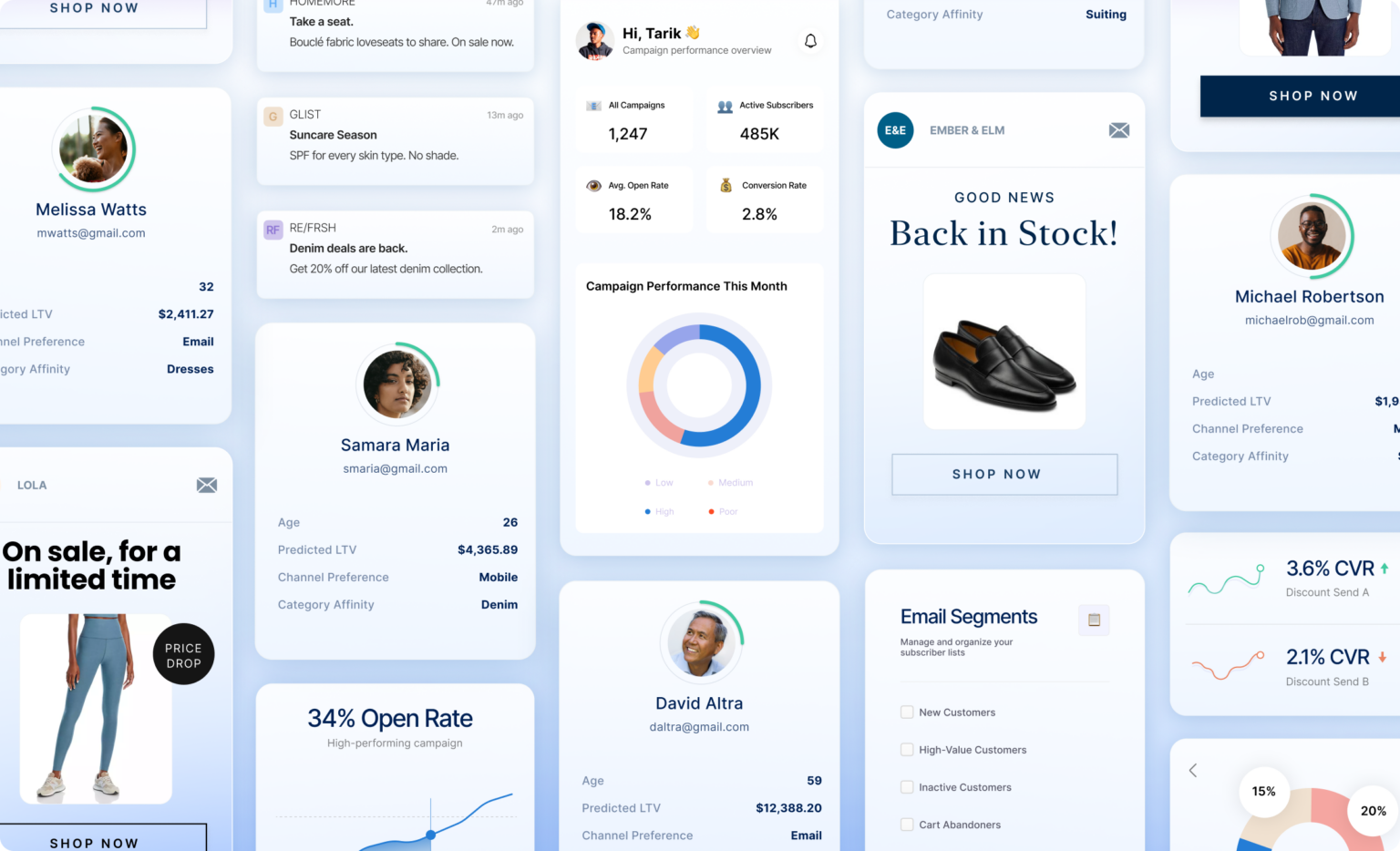
Most enterprise lifecycle teams are running far more sophisticated programs than they were even three years ago.
Typical programs now include:
-
-
- Always-on triggered journeys
- Daily promotional sends
- Dynamic product recommendations
- Predictive segmentation
- Cross-channel orchestration
- Continuous A/B testing
-
Each campaign generates dozens of signals across engagement metrics, conversion data, audience overlap, creative performance, send timing effects, product affinity patterns.
Multiply that across hundreds of campaigns per month, and the result is a massive volume of performance data.
But the insight extraction layer hasn’t kept pace. Instead, marketers still rely on:
-
-
- Manual reporting workflows
- Dashboard hopping across multiple systems
- Spreadsheet assembly
- Reactive campaign reviews
- Support tickets for troubleshooting
-
This slows down what should be the most valuable part of the job: improving performance.
The Bluecore Marketing Agent changes that dynamic by embedding performance intelligence directly into the marketing workflow.
From Campaign Execution to Performance Intelligence
Historically, lifecycle marketing platforms have focused on execution infrastructure:
Audience creation
Campaign orchestration
Message delivery
Those capabilities remain essential. But they solve only half the problem. Once campaigns launch, marketers still have to answer questions like:
-
-
- Why did this campaign underperform?
- What changed compared to last week?
- Which segments are driving the most revenue?
- Are there hidden issues affecting deliverability or targeting?
- What should we test next?
-
Marketing Agent continuously analyzes campaign data and surfaces answers in real time.
Instead of manually searching for performance signals, marketers can ask questions directly and receive immediate diagnostic insights.
The result is a shift from data retrieval to decision-making.
AI That Understands Marketing Performance
Many AI tools promise insights, but they often sit outside the actual marketing workflow. That creates a new problem: marketers still have to manually gather data before AI can analyze it.
Marketing Agent operates directly within the lifecycle marketing environment, meaning it has immediate visibility into:
-
-
- Campaign performance trends
- Audience engagement patterns
- Segment-level results
- Send-level diagnostics
- Testing outcomes
-
Because it analyzes this data continuously, it can surface insights instantly, without requiring marketers to manually assemble reports or query multiple dashboards.
This is where AI becomes operational leverage for marketing teams.
When Insight Becomes Instant, Optimization Speeds Up
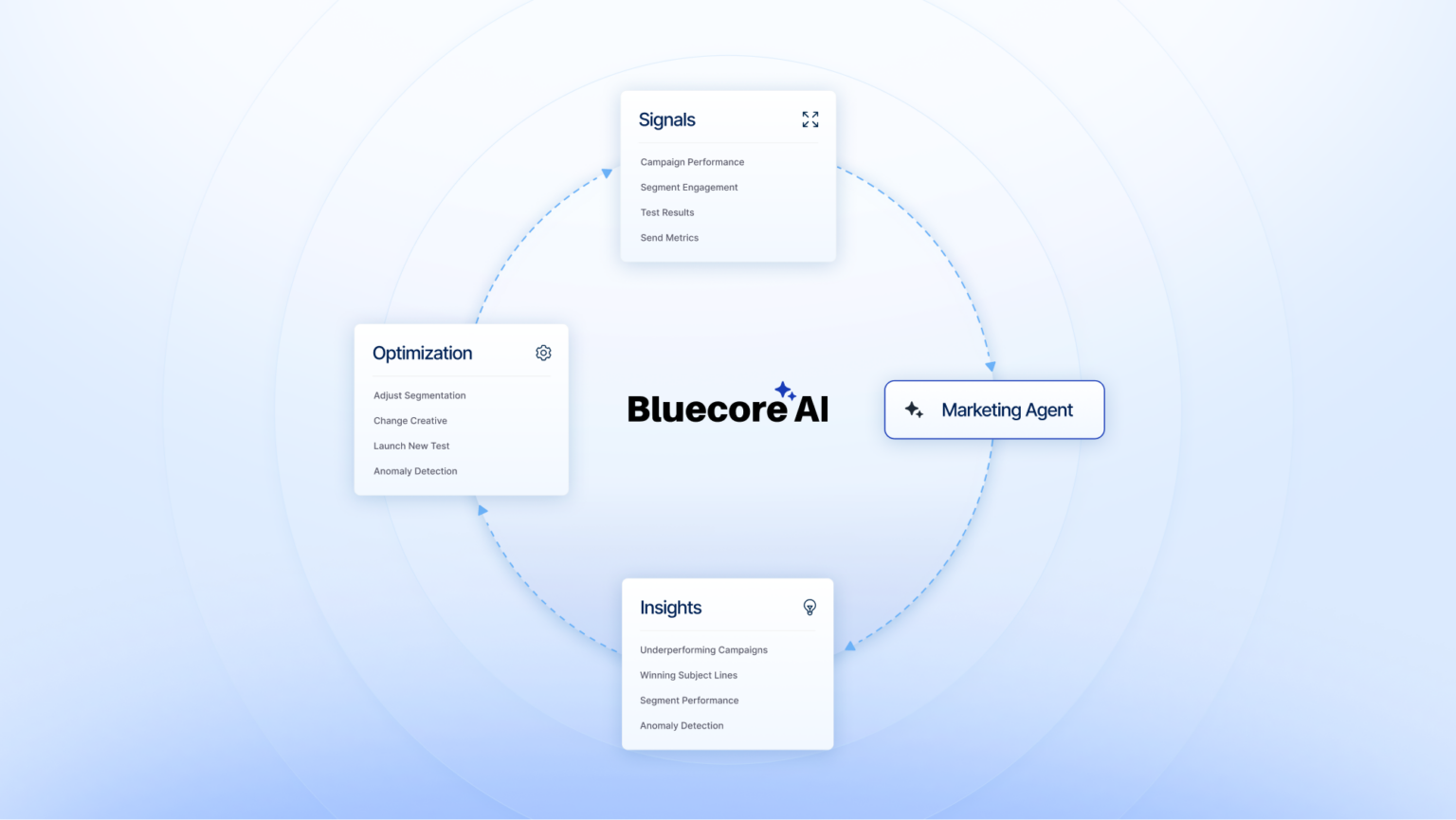
The biggest impact of Marketing Agent isn’t just faster reporting. It’s faster learning cycles.
When marketers can immediately understand what’s working and what isn’t, optimization becomes continuous instead of retrospective.
Teams can:
-
-
- Identify underperforming campaigns sooner
- Spot winning creative patterns earlier
- Adjust segmentation strategies faster
- Detect anomalies before they impact revenue
- Increase testing velocity across campaigns
-
Over time, this compounds. The speed at which a team learns from performance data becomes a competitive advantage.
Retailers who shorten the loop between signal → insight → action consistently outperform those operating on slower reporting cycles.
The Next Layer in the Lifecycle Marketing Stack
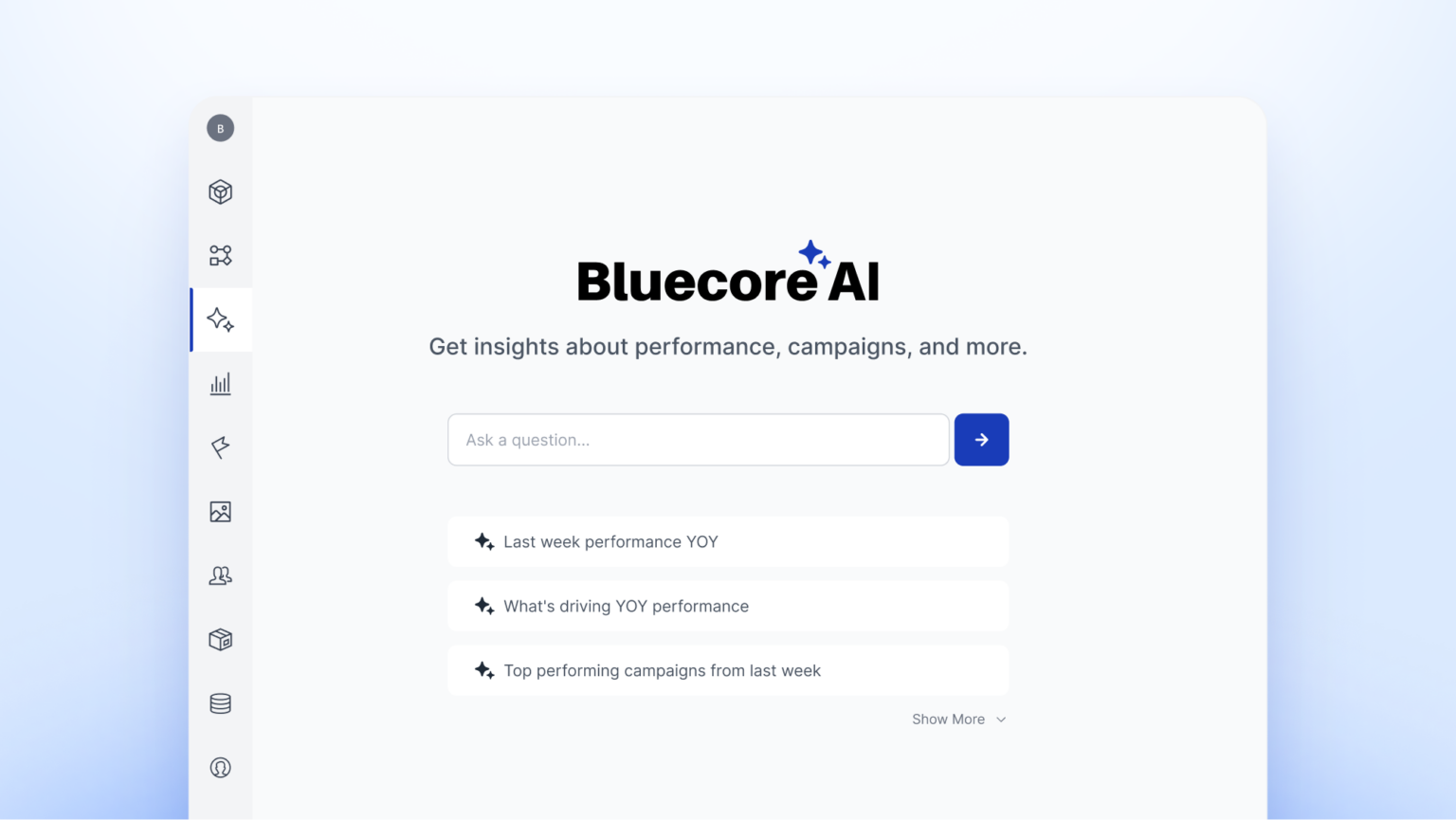
The next phase of marketing technology isn’t just better campaign tools. It’s intelligence embedded directly into those tools. Lifecycle marketers don’t need more dashboards. They need faster answers.
Marketing Agent introduces a new layer in the lifecycle marketing stack, one that continuously monitors campaign performance, surfaces insights, and helps teams move from questions to answers instantly.
Because as marketing complexity grows, the teams that win won’t be the ones sending the most campaigns.
They’ll be the ones learning from performance the fastest.